The pile is the raised, fluffy surface that does the actual drying on a towel, and how that pile is finished decides how the towel performs. There are two basic approaches: leave the woven loops intact (loop pile) or shear them so the fibre ends stand free (cut pile). Both start from the same looped terry base, but the finish changes absorbency, durability, feel, and appearance in predictable ways.
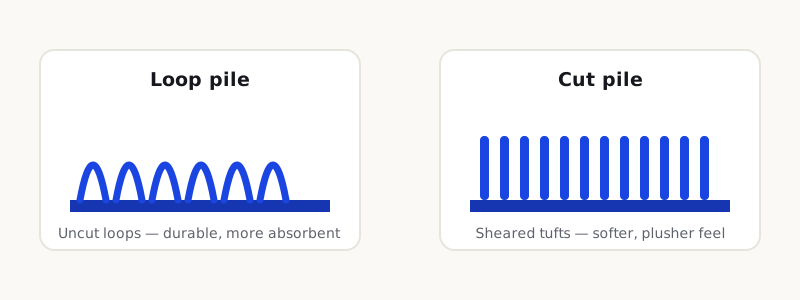
What is the difference between loop pile and cut pile?
Loop pile keeps the loops closed; cut pile opens them. When a towel is woven, yarn is pulled up into rows of loops that sit above the base cloth. In a loop pile towel those loops are left exactly as woven. In a cut pile towel a machine shears across the tops of the loops, slicing each one open so the fibres splay upward as individual tufts. That is the whole mechanical difference - and it is enough to change everything about how the towel behaves.
Cut pile is the construction behind velour towels, where the entire face is sheared smooth.
How do they compare across the things that matter?
| Factor | Loop pile | Cut pile |
|---|---|---|
| Absorbency | Excellent | Good |
| Durability | High | Lower |
| Feel | Textured, springy | Soft, smooth, plush |
| Appearance | Practical, nubbly | Refined, velvety |
| Shedding | Minimal | More, especially when new |
| Drying time | Slower | Moderate |
Which is more absorbent?
Loop pile is more absorbent because intact loops do two things at once: they present more surface area to the water, and the closed loop wicks moisture along its length rather than just holding it at the tip. Together these make the loop an efficient little sponge.
Cutting the loops removes some surface area and interrupts the wicking path, so cut pile soaks up water more slowly and reaches saturation sooner. It still dries you adequately, but if raw absorbency is the goal, loop pile is the better engine.
Which is more durable?
Loop pile lasts longer. A closed loop is mechanically robust: it resists abrasion, and if a single loop snags it can usually be trimmed flush without unravelling the surrounding fabric. Cut pile exposes loose fibre ends that are more vulnerable to rubbing, so a cut pile surface tends to shed more - noticeably so when new - and can flatten or thin in high-contact areas over years of washing.
This is why heavy-use towels and hotel stock lean towards loop pile, while cut pile appears more often on decorative and feel-led products.
Which feels and looks better?
Cut pile wins on softness and looks. The sheared fibre ends create a smooth, velvety, even surface that feels plush against the skin and photographs well, taking dyes and printed patterns cleanly. Loop pile has a springier, more textured hand - the familiar nubbly grip of a workaday towel - and a practical rather than refined appearance.
Neither is objectively better here; it is a genuine preference. Some people find loop pile's texture more satisfying and effective, while others want the smooth luxury of cut pile.
Can a towel use both?
Yes, and many good ones do. A common design pairs a cut pile (velour) face for softness and appearance with a loop pile back for absorbency and grip. You get a smart-looking towel that still dries you properly. Some towels also use loop pile throughout but vary loop height to balance plushness and performance.
How does care differ?
Care is similar but cut pile needs a gentler touch. For both, wash warm, avoid fabric softener - it coats fibres and cuts absorbency - and skip heavy ironing, which crushes the pile flat. Cut pile is more sensitive to aggressive washing and high heat, both of which speed up matting and shedding of the loose fibre ends, so a gentle cycle and lower dryer heat help it keep its look.
The bottom line
For everyday bathrooms, family use, and anywhere absorbency and longevity matter, choose loop pile - it dries better and outlasts the alternative. Choose cut pile where a soft, smooth, refined surface is the priority, such as decorative or guest towels. If you want both, look for a dual-construction towel with a cut pile face and a loop pile back, which is the most versatile compromise for a main bathroom towel.