Terry and velour are not rival materials - they are two finishes of the same fabric. Both start as looped terry cloth woven from cotton. The difference is one extra step: velour has its loops sheared off to expose the fibre ends, creating a soft, smooth, velvety surface. That single change shifts the towel's character from "best at drying" to "best at feeling and looking luxurious".
What is the difference between terry and velour?
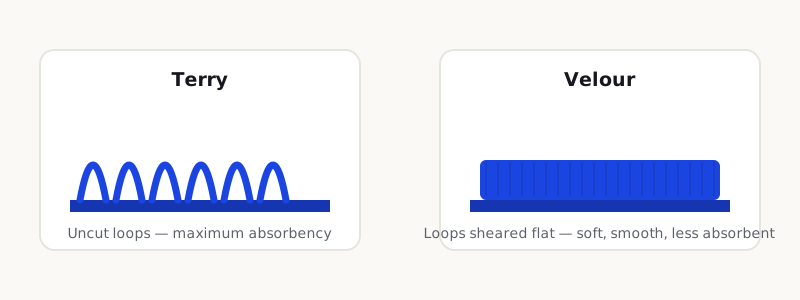
Terry keeps its loops intact; velour cuts them. In terry cloth, yarn is woven into raised loops that stand up from the base fabric. Those loops give a large surface area and excellent water uptake. Velour takes that same looped fabric and shears the tops of the loops flat, so instead of standing loops you get an even, plush pile of cut fibre ends. The result looks and feels more like velvet, hence the name.
Crucially, most velour towels are not velour all the way through. A very common construction is velour on the show face and ordinary terry loops on the reverse, which lets the towel look smart while still drying you reasonably well.
How do they compare at a glance?
| Factor | Terry | Velour |
|---|---|---|
| Surface | Uncut loops | Sheared, flat pile |
| Absorbency | Excellent | Good (lower than terry) |
| Softness | Soft | Softer, smoother |
| Appearance | Textured, practical | Smooth, plush, decorative |
| Durability | Higher | Lower (cut fibres shed) |
| Drying time | Slower | Moderate |
| Best at | Drying performance | Look and feel |
Which absorbs better?
Terry absorbs better, and the reason is structural. Each intact loop adds surface area and acts like a tiny wick, pulling water in and holding it. Shearing the loops for velour removes some of that surface area and breaks the wicking action, so a velour face dries you a little more slowly and holds less water before it feels saturated.
This is why all-over velour towels can feel underwhelming as a main bath towel: they wipe water around more than they soak it up. A dual-sided towel mitigates this - you dry with the terry side and enjoy the velour side against the skin.
Which feels softer and looks better?
Velour wins clearly on both softness and appearance. The sheared pile feels smooth and velvety rather than nubbly, and the even surface takes printed designs and rich dyes beautifully. That makes velour the usual choice for decorative bathroom towels and patterned beach towels, where looks and a pleasant surface matter as much as function.
Terry feels soft too, but it has the familiar textured grip of standing loops. Many people simply prefer that practical, no-nonsense feel for everyday drying.
How do durability and care differ?
Terry is the more hard-wearing of the two. Intact loops resist wear well, and a snagged loop can usually be trimmed without harm. Velour's cut fibres are more exposed, so they can shed a little - especially when new - and the smooth pile can flatten or develop a worn patch over time and heavy laundering.
Care is broadly similar for both: wash warm, skip fabric softener (it coats fibres and reduces absorbency), and avoid heavy ironing, which crushes pile. Velour benefits particularly from a gentle approach, as aggressive washing and high heat accelerate matting of the cut surface.
Best uses for each
Terry suits:
- Everyday bath towels and bath sheets where drying is the job
- Family bathrooms and high-use households
- Anyone who wants maximum absorbency and longevity
Velour suits:
- Decorative or guest towels where appearance matters
- Printed beach towels and patterned designs
- People who prioritise a soft, smooth, luxurious surface
- Dual-sided towels (velour face, terry back) for a balance of both
The bottom line
If your priority is getting dry quickly and owning a towel that lasts, choose terry - the uncut loops do the work. If you want a soft, smooth, good-looking towel and can accept slightly lower absorbency, choose velour, ideally a dual-sided design that gives you a velour face and a terry back. For most main bathrooms, terry is the sensible default; velour earns its place as a decorative, beach, or guest towel.